
The Misogyny You Can't Quite Name - And Why That's the Point

Jun 11 / Julia Gidney
Most people picture workplace misogyny as something obvious: a lewd comment, a blatant pay gap, a woman being passed over for promotion in favour of a less qualified man.  While all of those things still happen, research tells us something more uncomfortable. 

The misogyny causing the most damage today is the kind that's hardest to see, hardest to name and hardest to prove.  It smiles. It holds the door open and sometimes, it genuinely thinks of itself as an ally even when it's perpetuating gender-based stereotypes and denying equal opportunity.

What We Mean When We Talk About Misogyny at Work
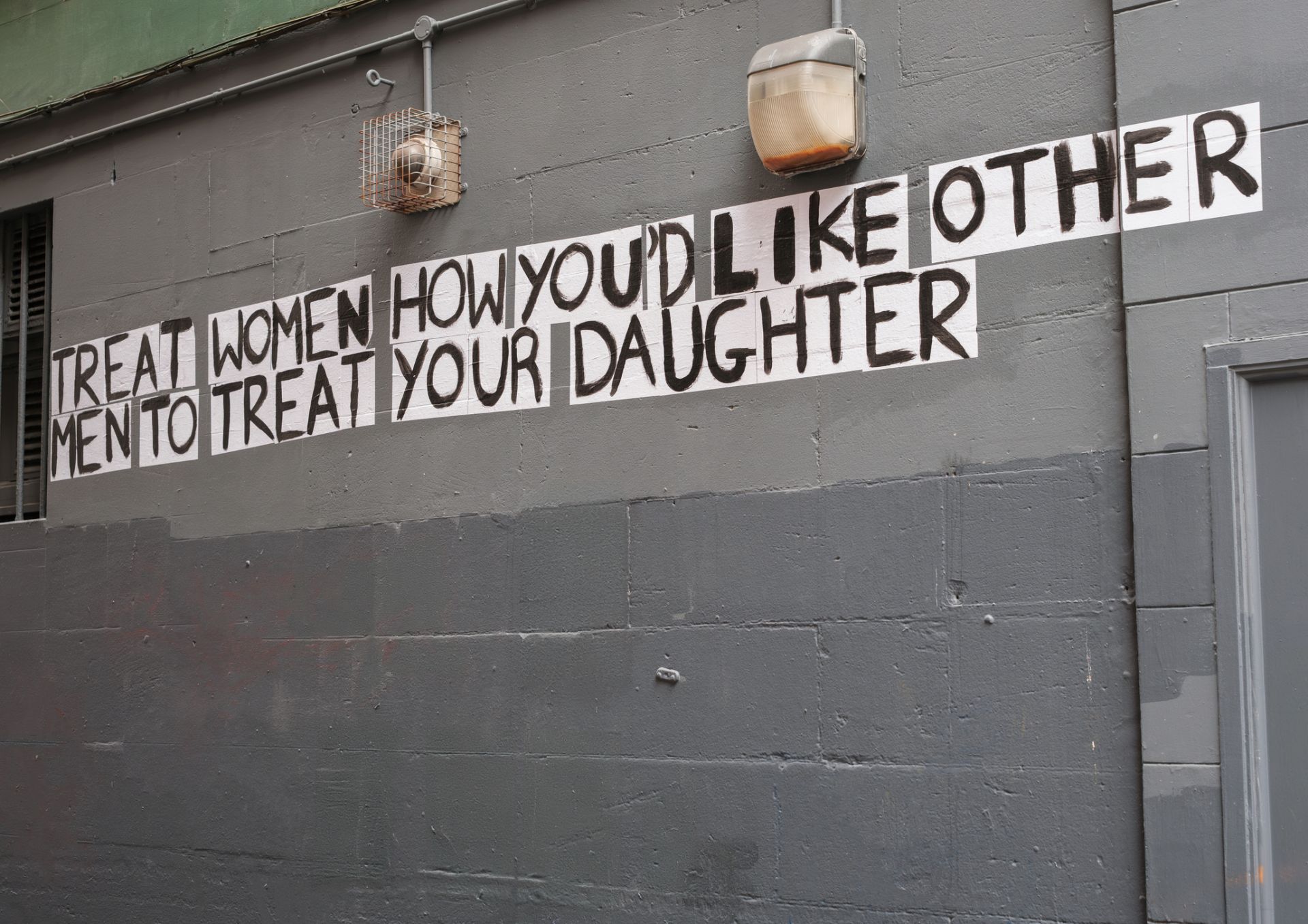
The word "misogyny" tends to trigger defensiveness.  It sounds extreme and the preserve of violent men and online trolls.  It's more nuanced than that.
multi-coloured jigsaw piece
Researchers and sociologists have increasingly drawn a distinction between misogyny in the form traditionally described as 'hatred' of women and girls and misogyny as a system or a set of social norms, that controls women's behaviour and punishes those who step outside their assigned role.

In that framing, misogyny doesn't simply require a misogynist, it requires a culture willing to look the other way, reward certain behaviours and quietly make life harder for women who don't play along.  That culture expresses itself in many ways: in assumptions about who is and isn't leadership material and why, in justifications for not rewarding women equally to men, in derision or gender-based criticism dressed up as 'banter' and in the way a woman's body becomes a topic of conversation at work without her consent. 

At its most serious, misogyny is behaviour that is threatening, intimidating or violent, usually when a power dynamic comes into play and when women are at their most vulnerable in their workplaces. 
What connects all of these is a shared belief system, most often unspoken but still present: that women are somehow 'less' than men and should be treated as such.

Let's take a look at some of the distinct but often overlapping disguises of misogyny.
Manager in team meeting listens to colleague

Disguise no1: Benevolent sexism 

'Benevolent sexism' is the patronising attitudes, usually (but not exclusively) held by men, that appear positive on the surface but reinforce women's subordinate status underneath. '.  
Research published in the Harvard Business Review shows that even well-intentioned men frequently respond to sexist workplace comments with 'benevolent sexism.  They offer help, flattery or protection in ways that quietly signal that women can't manage on their own or that they should hold or stay in gender-typical roles.

Have you ever heard any of the following or similar?
  • "You're empathetic and organised so I'd like you to run our mentor programme." 
  • "You'd be better at managing this [awkward] client. You're more patient that everyone else [male colleagues]"
  • "You always know what's going on around here - you can prepare the monthly newsletter". 
  • "We need some friendly ladies to greet clients/hand out delegate badges.  They can organise the refreshments." 
  • "This is your area not mine and you're great at it but let me have the detail again, to see if I can add anything."  
The consequences of benevolent sexism for women are usually the same: feelings of career-frustration, incompetence and self-doubt and negative impacts on mental and physical health.

This is also the space where comments about appearance tend to live. A remark about a woman's clothes or looks might seem harmless, even kind, in isolation. But when a woman receives only superficial comments about how she looks, never substantive feedback on her work, the cumulative effect is clear: she is being seen as a body, not a professional. Over time, that registers. It is a form of objectification and it belongs in the same category as more overt forms of sexism because it does the same work of reducing a woman to her surface rather than her substance.
"To men, it might seem subtle. But for women, it's never subtle."   Feminism in India, 2025

Disguise no2: Weaponised incompetence and the invisible tax on women's time

Have you noticed how the meeting notes, the team social events, the induction lunches, the emotional support for stressed colleagues ... how all of it seems to land on the same desks?  How the birthday card always gets passed around by women? 

This is what researchers call the "invisible tax" on women's labour, both deliberate and deniable. It operates through weaponised incompetence: the unspoken assumption that women are simply better at these tasks, which conveniently absolves everyone else, the men, from doing them. These responsibilities are always unpaid, on top of usual responsibilities, often after-hours and always framed as for the good of team culture.

Meanwhile, assumed inability or inaccessibility impacts mothers or women perceived as likely to become mothers. The so-called "motherhood penalty" is one of the most persistent structural biases in working life. Women are routinely passed over for projects or promotions the moment they announce a pregnancy or even before, if a manager makes assumptions about their future plans. A woman without children may find herself penalised anyway, written off as a "flight risk" the moment she gets married or reaches a certain age.

The assumption that having children makes a woman less committed or less capable operates almost entirely in the space where such things are never said out loud. Yet, the moment a woman asks for flexible work to accommodate childcare commitments, she may also find herself informally barred from career development opportunities.  Never (or rarely) expressly but it happens nevertheless.
"Taking one for the team could be holding all women back."  Harvard Business Review

Manager in team meeting listens to colleague

Disguise no3: The likeability trap

Do some men (and women) like men more than women and link personal qualities to competence and if they do, why is that? Is it another societal norm whereby assumptions are made about confidence, assertiveness and that old chestnut ... gravitas? 
A woman who is assertive is often described as aggressive. A man who exhibits the same behaviour is described as confident. This measurable double standard creates what sociologists now call a "likeability labour" burden. This is where disparagement often hides. 
  • A senior female executive who is direct gets labelled 'cold'. 
  • One who advocates for her team gets called political. 
  • One who challenges a decision gets told she's not a team player. 
These are just a few examples of differential treatment based on gender.  These judgements tend not to be attached to a man doing the same things and that's the point. The double standard is real and has become a mechanism for keeping women in a narrower lane.  It is the output of a system in which misogyny, whether overt or disguised, continues to operate largely unchallenged.

McKinsey's 2025 Women in the Workplace report found that women remain underrepresented at every level of the corporate pipeline,  making up just 29% of C-suite roles, unchanged from the previous year. 

In 2024, only 32.2% of leadership roles worldwide were held by women. Only 8% of S&P 500 CEOs were women.

Sources: McKinsey/Lean In Women in the Workplace 2024 & 2025

Disguise no4: The cost of speaking up

So why are women so reluctant to call out misogyny.  I can think of a few reasons:
  • Fear of professional/career consequences. 
  • Fear of not being believed. 
  • Fear of social consequences. 
  • Fear of the process itself. 
  • Fear rooted in the power imbalance and in lack of control. 
  • Internalised doubt. 
  • Cultural pressure not to complain. 
These are genuine fears and research consistently shows that fear of retaliation is one of the primary reasons women don't report sexual harassment, discriminatory behaviour or misogynistic attitudes or behaviours.

Understanding this is essential for any organisation that genuinely wants to create safe reporting cultures not just the appearance of one.
A 2023 TUC poll found that 60% of women have experienced harassment at work, yet fewer than one in three (30%) of those who experienced sexual harassment told their employer. Of those who stayed silent, 39% felt they would not be believed or taken seriously, 37% thought reporting would negatively impact their work relationships, and 25% feared it would damage their career prospects. 

Disguise no5: The manosphere comes to the office

Our 5th disguise is a recent arrival - stemming from a network of online influencers collectively known as the "manosphere" that has spent several years building enormous audiences among young men, around a narrative that feminism is to blame for men's struggles. What began on fringe internet forums has gone mainstream and whether we acknowledge it or not, those attitudes are now very likely sitting in our workplaces.

UN Women has formally warned that the manosphere's toxic narratives are no longer confined to obscure online spaces.  They are reaching into schools, workplaces and personal relationships. HR professionals are starting to notice: manosphere-coded language and behaviours are showing up in teams, in hiring conversations and in how some younger male employees relate to female colleagues and managers.   At its milder end, this shows up as dismissiveness and low-level contempt. At its more serious end, it tips into intimidation, behaviour designed not just to demean but to unsettle, to make a woman feel physically or professionally unsafe. Both ends of that spectrum matter and both belong to the same continuum.

We need to be wary that our next generation of decision takers are not members of this ideology and as employers, constructively educate, monitor and act act against corresponding negative and prejudicial behaviours. 
"The online world is not disconnected from our everyday working lives — it shows up in meetings and group chats, but also in hiring decisions, sexist assumptions and how women are spoken about when they are not in the room."  Lee Chambers, Business Psychologist and Founder of Male Allies UK, People Management, 2025

So what does calling it out actually look like? 

Recognising misogyny in its modern forms is the first step but recognition alone doesn't create change. That requires the willingness to name what's happening in real time, without waiting for a clear-cut, undeniable example that everyone can agree on - because that example rarely comes. 

Here's how to make a start:
  • Notice patterns, not just incidents
  • Interrupt benevolent sexism — especially when it looks like a compliment
  • Distribute invisible labour visibly and equitably
  • Check assumptions about mothers or women who might become mothers, before they shape decisions
  • Create genuinely safe routes for women to raise concerns and protect those who use them
  • Understand that silence in the face of misogynistic culture is not neutrality — it's permission
  • Be an active bystander - Don't wait until behaviour is extreme before naming it — the earlier the intervention, the easier it is

Ready to go further?

Understanding misogyny in its modern forms and knowing how to call it out constructively, is a skill.
This skill can be learned and it can be taught across teams.

Our Wdidi online eLearning course on Calling Out Misogyny is engaging and convenient for learners. 
It gives individuals and organisations the frameworks, language and confidence to recognise misogyny wherever it hides and to respond in ways that create lasting change.